

The History of Ski Tourism in Montafon
The history of ski tourism in Montafon shows how the first winter sports enthusiasts, ski clubs and simple lift systems developed into one of Vorarlberg’s most important winter sports regions. From the earliest ski lifts to the Garfrescha Bahn and Silvretta Nova, and on to today’s Silvretta Montafon, the valley has been shaped by a pioneering spirit, alpine tradition and continuous technical development.
This skiing history is also closely connected to the development of Genusshotel Vermala in St. Gallenkirch. Its proximity to the Garfrescha Bahn, Silvretta Montafon and the mountains of Montafon continues to shape winter holidays at Vermala today. Montafon is now one of the most important ski regions in the Alps and the tenth-largest ski area in Austria, with a proud and rich tradition of ski tourism.
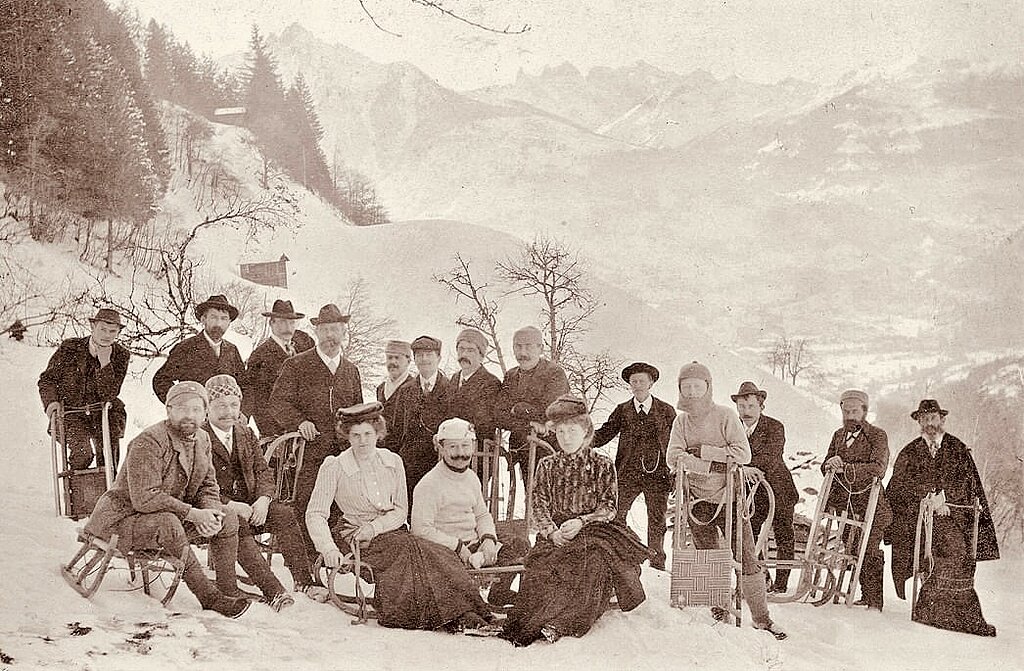
Tourism in Montafon until the Early 20th Century
Tourism in Montafon has a history spanning almost 150 years. The first mountain ascents began as early as the 18th century, and by the end of the 19th century, summer retreats were attracting numerous visitors seeking rest and relaxation to the valley. Pilgrimages also became very popular around 1900. With the construction of the railway in 1905, Montafon became easier to reach and experienced a remarkable peak in tourism. At first, however, tobogganing was far more popular than skiing.
Travel reports written by authors helped to raise awareness of the region, while renowned figures such as Archduke Johann of Habsburg, Sigmund Freud and Ernest Hemingway also visited Montafon.

The First Ski Clubs in Montafon – Early 20th Century
At the beginning of the 20th century, the first winter sports clubs were founded, laying the foundations for the later skiing boom. This development was interrupted by the outbreak of the First World War. After the war, winter sports experienced a brief revival with the establishment of new ski clubs and the organisation of club championships, although participants still had to make the ascent on foot. The Second World War led to the “voluntary dissolution” of numerous ski clubs.
1947: Austria’s First Chairlift in Montafon
In the post-war years, winter sports experienced a true boom in Montafon, shaping the region for decades to come. Significant progress was made in 1947: the region’s first lift, the Motta drag lift in Gaschurn, was built. In the same year, Montafon became the setting for a nationwide sensation when Austria’s first chairlift opened at Grabs in Tschagguns. These developments marked a major milestone for winter sports in Montafon.
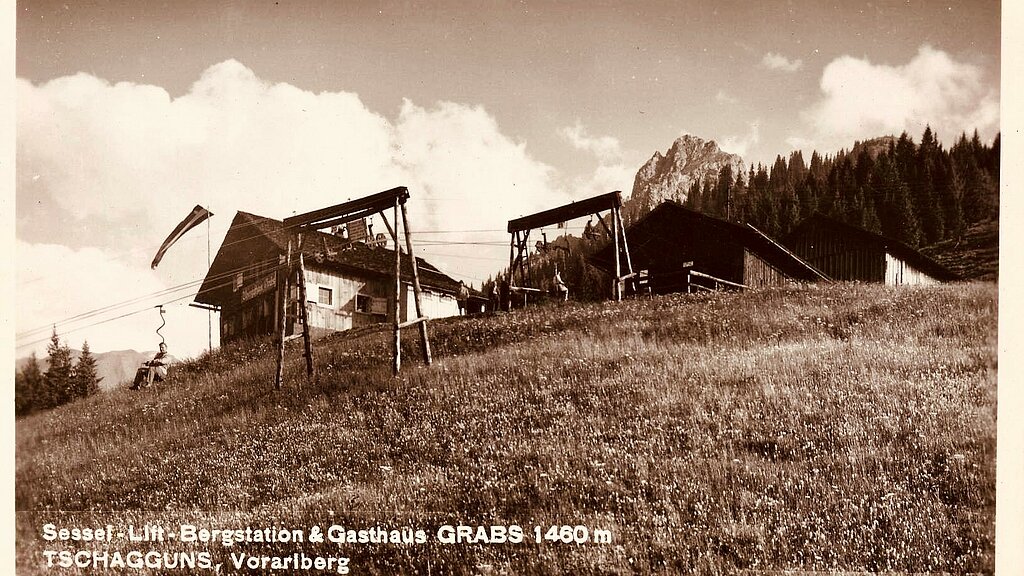
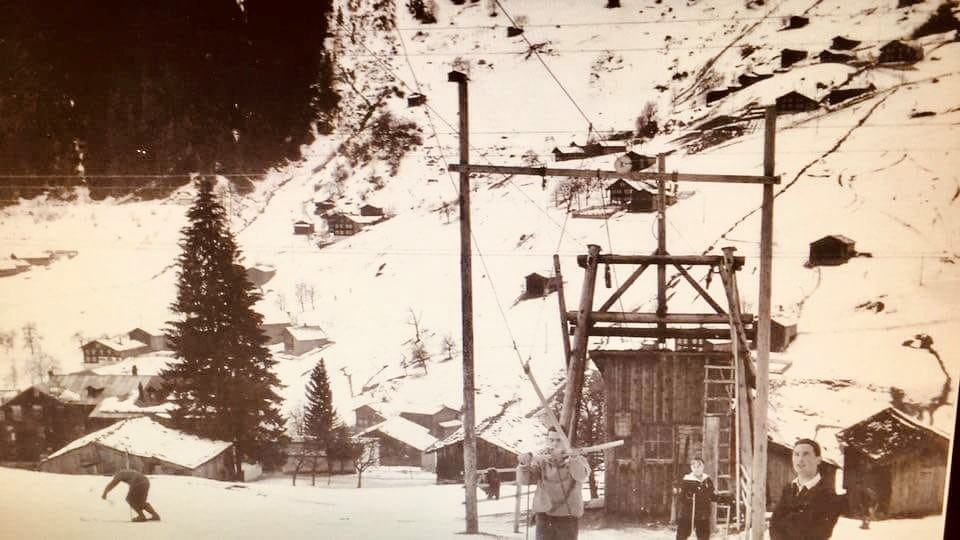
Key Milestones in the History of Skiing in Montafon
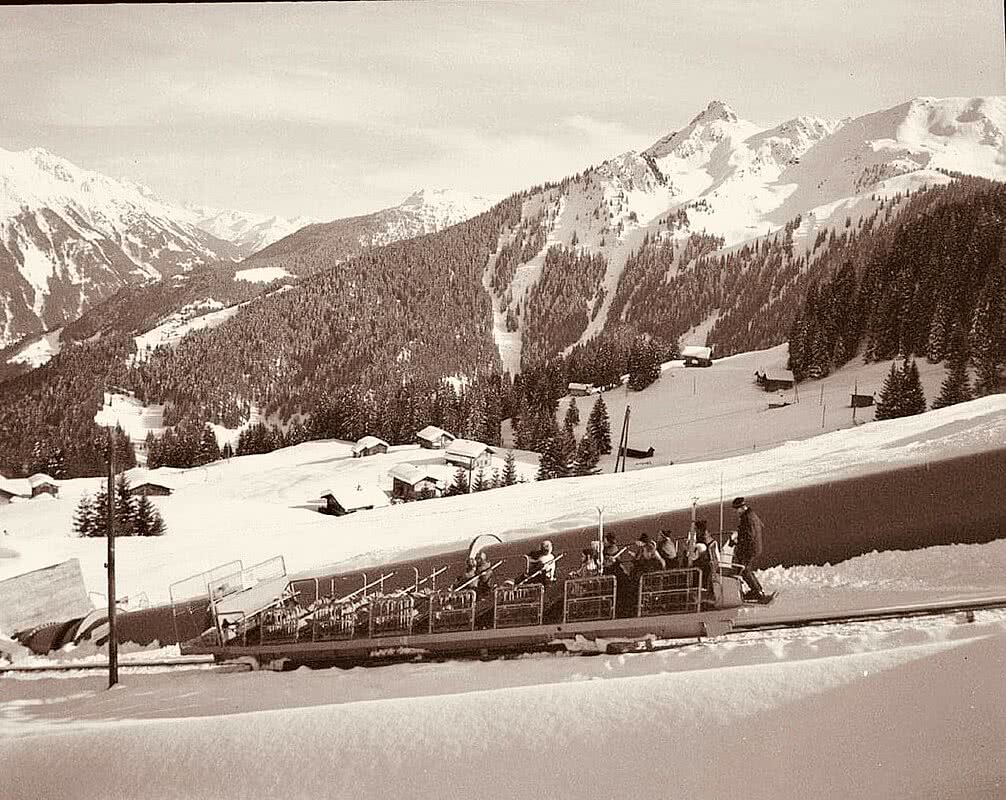
The development of the ski areas in our region began with several important milestones that laid the foundations for today’s modern winter sports facilities. The Hochjochbahn chairlift in Schruns, built in 1949, marked the beginning of what would later become the Hochjoch ski area. Just one year later, during the 1950/51 season, the Schafberg chairlift opened in Gargellen, laying the foundation for today’s Gargellen ski area. Another decisive step followed during the 1958/59 season in what is now the Golm ski area, with the opening of the Golmerbahn in Tschagguns, an inclined railway, and the Vermuntbahn in Partenen. These developments made a significant contribution to the Montafon ski region and laid the foundations for the ski area landscape of the future.

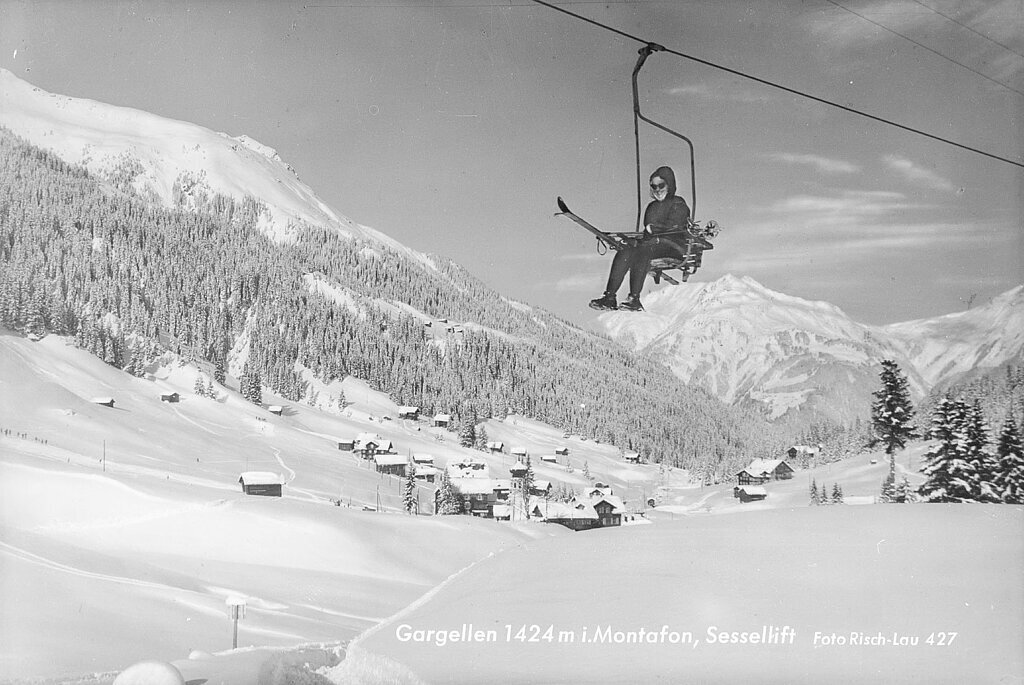
When the Ski Slopes in Montafon Were Still Groomed by Hand
Until the Late 1960s
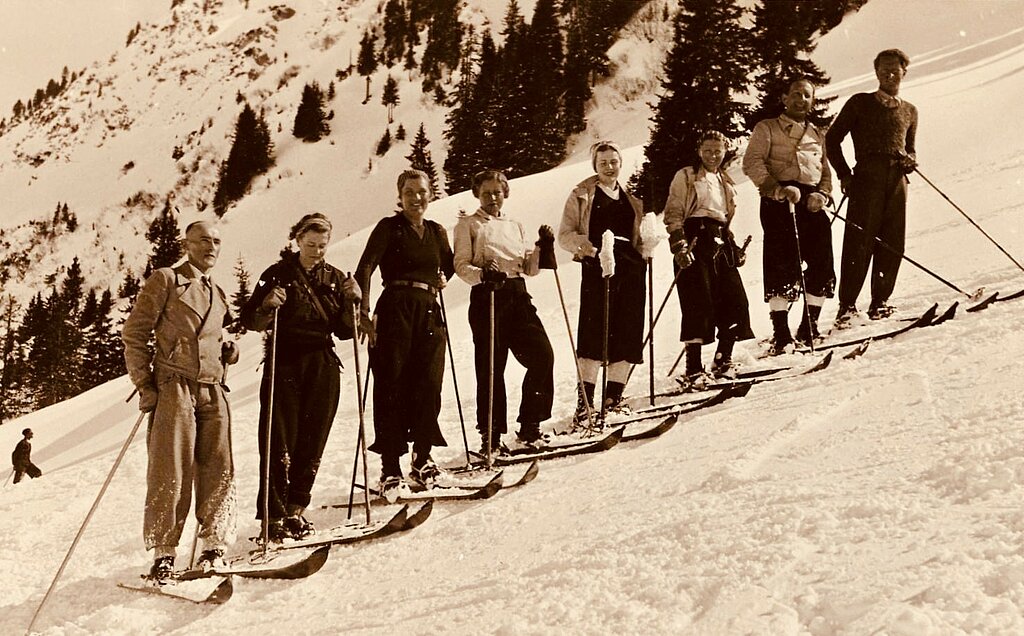
Even in the 1960s, ski slopes were traditionally groomed by stamping down the snow with skis. Anyone willing to help the lift operators with this task for a few hours each week received complimentary lift passes as a thank-you. Ski instructors were offered additional pay if they helped keep the slopes in good condition after their lessons or before starting work. It was not until the end of the 1960s, when the first snow groomers were purchased, that piste maintenance could be taken to an entirely new level.
Private Room Rentals in Montafon until the 1970s
Guests Were Kings in Their Own Rooms
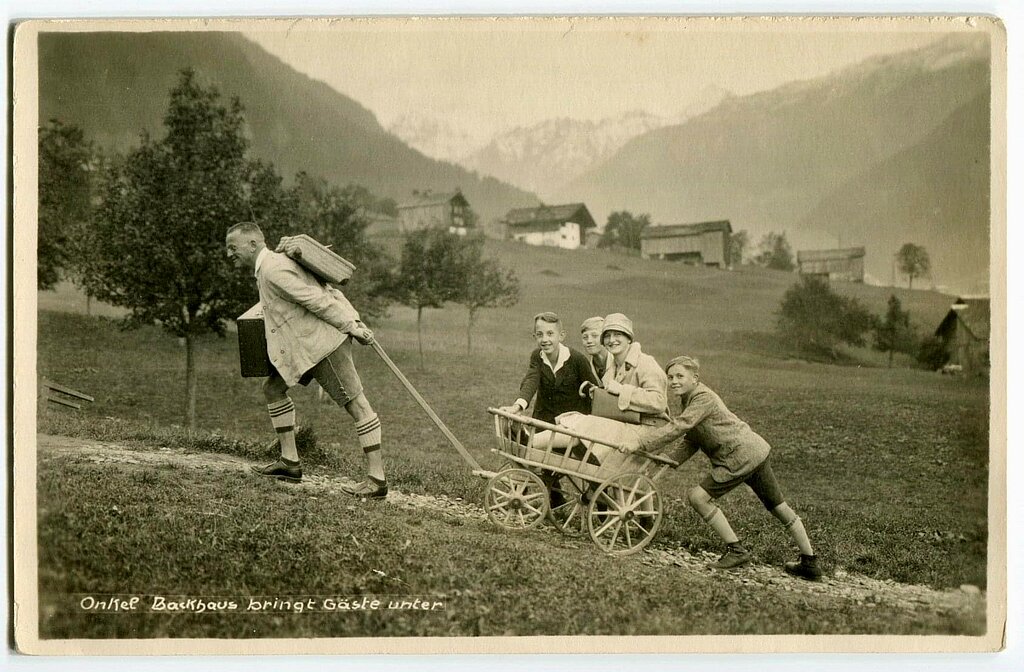
In the early days, people in Montafon often rented out their own private rooms to visitors and moved into the cellar or attic themselves during the season. Until the 1970s, demand was so high – especially during the summer months – that accommodation was almost fully booked throughout the valley. This encouraged more and more homeowners to rent out rooms. It was also during these years that issues still familiar today began to emerge, including pressure on local infrastructure and criticism of tourism.
The photograph shows guests arriving in St. Gallenkirch. Their host is transporting the summer visitors in style to their new holiday accommodation.
Construction of Further Lift Facilities in Montafon
1960s
| 1962/63 | Kristberg cable car in Silbertal |
| 1965/66 | Sennigrat chairlift & Hochjoch gondola lift |
| 1966/67 | Versettlabahn chairlift in Gaschurn |
| 1967/69 | Expansion of the Golm ski area in Tschagguns |
1969: Construction of the Garfrescha Bahn in St. Gallenkirch
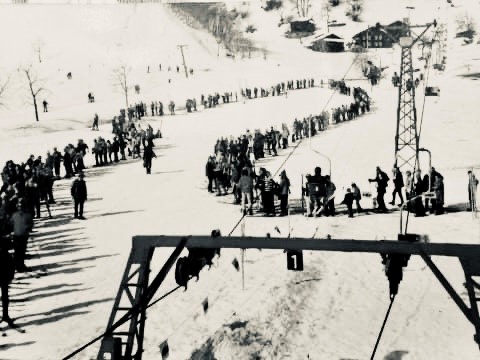
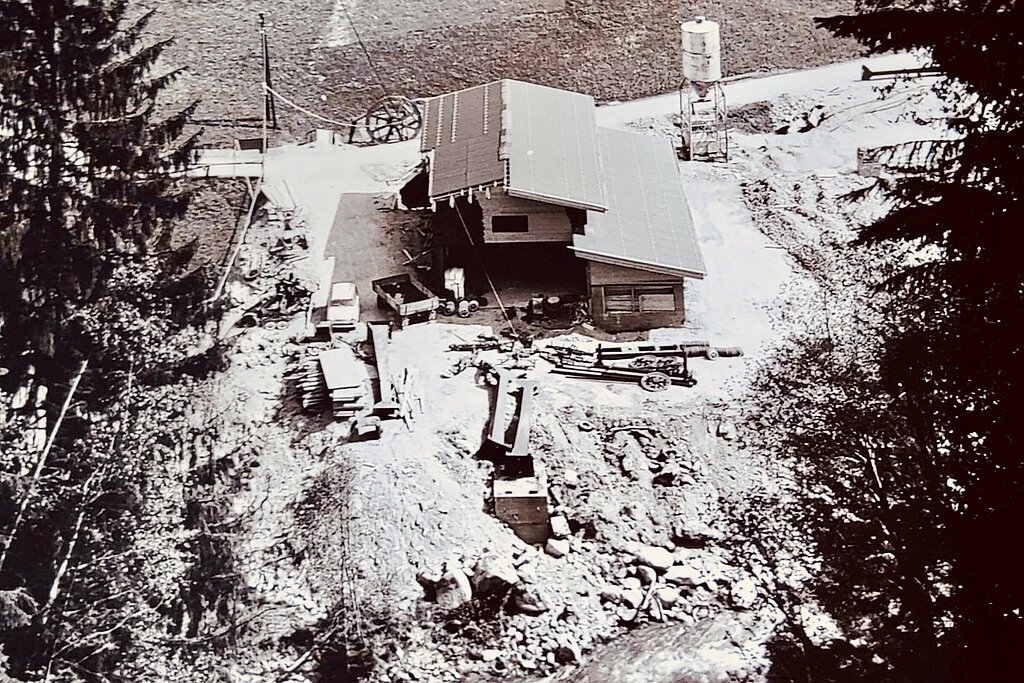
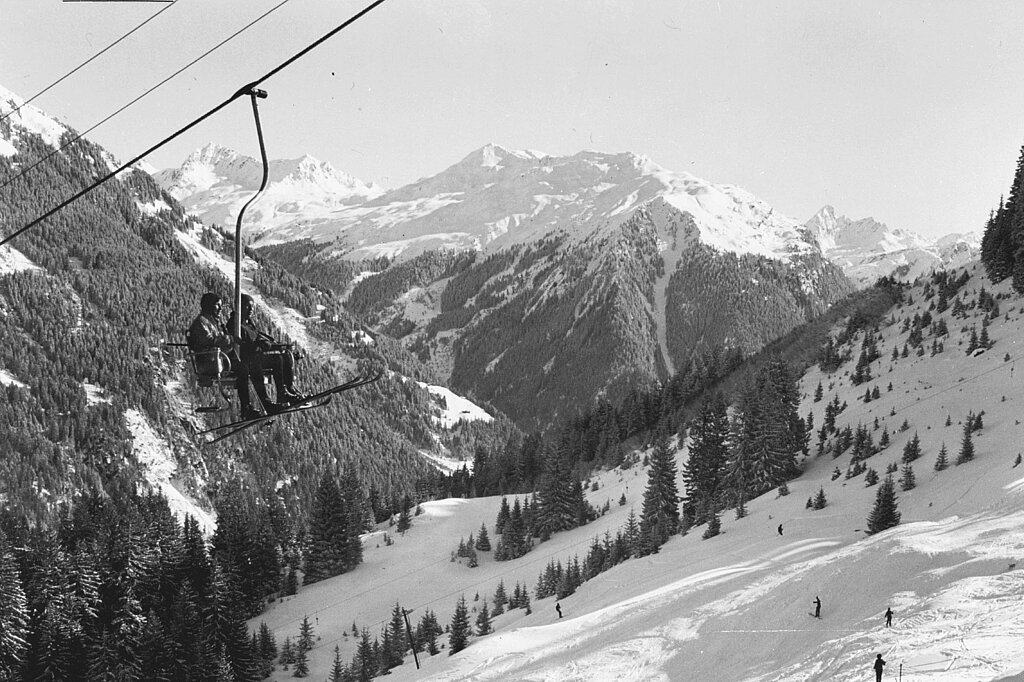
The Garfrescha chairlift, built in 1969, brought Hotel Vermala to within just 350 metres of the ski area – a decisive factor in the hotel’s further development. This lift is Austria’s oldest largely original double chairlift still in operation and a true one of a kind. With gradients of up to 95%, a length of 1.4 kilometres and a vertical rise of 600 metres, this fixed-grip chairlift boasts impressive figures that are rarely found today. Its side-mounted safety bars are one of its defining features. It offers a genuine sense of nostalgia that makes the hearts of Montafon enthusiasts beat faster – especially during night-time tobogganing beneath the stars as the snow falls softly.
1971: Merger of the Lift Companies
An important milestone in the history of the ski area was the merger of Liftanlagen Gaschurn GmbH and Garfrescha GmbH in 1971. The foundations for the later Silvretta Nova were laid by visionary shareholder and master builder Walter Klaus, who played a key role in the development of the ski area. By the end of 1972, Silvretta Nova had expanded to an impressive 14 lifts. In 1976, the first snowmaking system followed in the Nova valley.
The boom in winter sports tourism also benefited the other lift facilities in Montafon. In 1972 and 1973, the Golm and Gargellen ski areas were each expanded with two additional chairlifts.

Ski Pass Prices in Montafon in the 1960s and 1970s
During the peak season of 1960/61, a weekly ski pass cost 300 Austrian schillings. By 1964, ski pass revenue had already reached 1 million schillings, representing an increase of more than 100 per cent compared with the previous year. In the 1971/72 season, more than 17,000 ski passes were sold, generating revenue of 7.2 million schillings. Even at that time, the Montafon ski pass included use of the local bus services and the Montafonerbahn railway. According to reports from the tourism associations, this played a major role in the success of the concept.
The photograph shows the former Montafon season pass of a mischievous young Ewald Tschanhenz from the 1975/76 winter season.
1980: Expansion of the Hochjoch Ski Area
A great deal changed at Hochjoch in 1980. The ski area was expanded with two additional feeder lifts: the Zamangbahn in Schruns and the Kapellbahn in Silbertal. Three further chairlifts were also built within the ski area.
1980/81: Construction of the Valiserabahn
A World-First Innovation
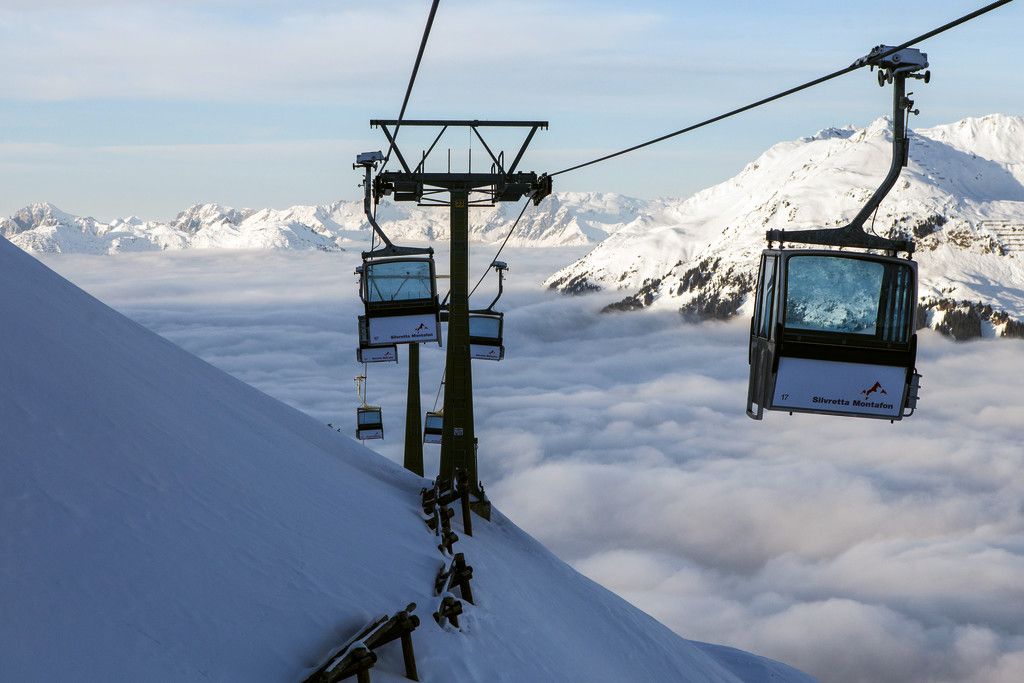
The construction of the former Valiserabahn was a true pioneering achievement. At the time it was built, it was the largest continuously circulating gondola lift in the world. It will also always remain Austria’s first detachable six-person monocable gondola lift in the MGD category – the first of its kind ever produced by the manufacturer Doppelmayr.
Norbert Tschanhenz still clearly remembers the difficult decision at the time: “It was the largest investment ever made in winter tourism in Montafon up to that point. The coupling component for this world-first gondola system sat on the desk at Silvretta Nova for more than two years. Knowing that a lift of this kind had never been built before involved a considerable risk and made the decision extremely difficult. The route itself was also anything but straightforward, with an extreme gradient, an enormous length and two sections. In the end, it took two years before they had the courage to say yes. Despite the considerable risk, it was worth it. Without this lift, we would not be where we are today."
The Valiserabahn was retired in 2021 to make way for the construction of the new gondola lift. Until then, however, it remained the steepest gondola lift Doppelmayr had ever built. We rescued five of its gondolas and gave them a new life by transforming them into a gondola restaurant.

Ewald Right in the Thick of It
The flooring and screeding work at the Versettlabahn, Nova Stoba IV and Valisera Hüsli was carried out by Tschanhenz Estriche. At the time, our host Ewald was completing his training as a floor layer and interior fitter in his parents’ company. Together with senior host Norbert and his brother Rudolf, he set to work.
Ewald still remembers it clearly: “That was an incredible achievement. After the Nova Stoba had burnt down, it simply had to be rebuilt as quickly as possible – the railway ran above it. It was also an enormous project. You do not simply lay the flooring in Central Europe’s largest restaurant overnight. And there were not many of us – just the three of us and two employees. Even today, whenever we travel up there, I can still picture the three of us on the floor levelling the screed. There is something very special about that.”
1986: Construction of the Versettlabahn
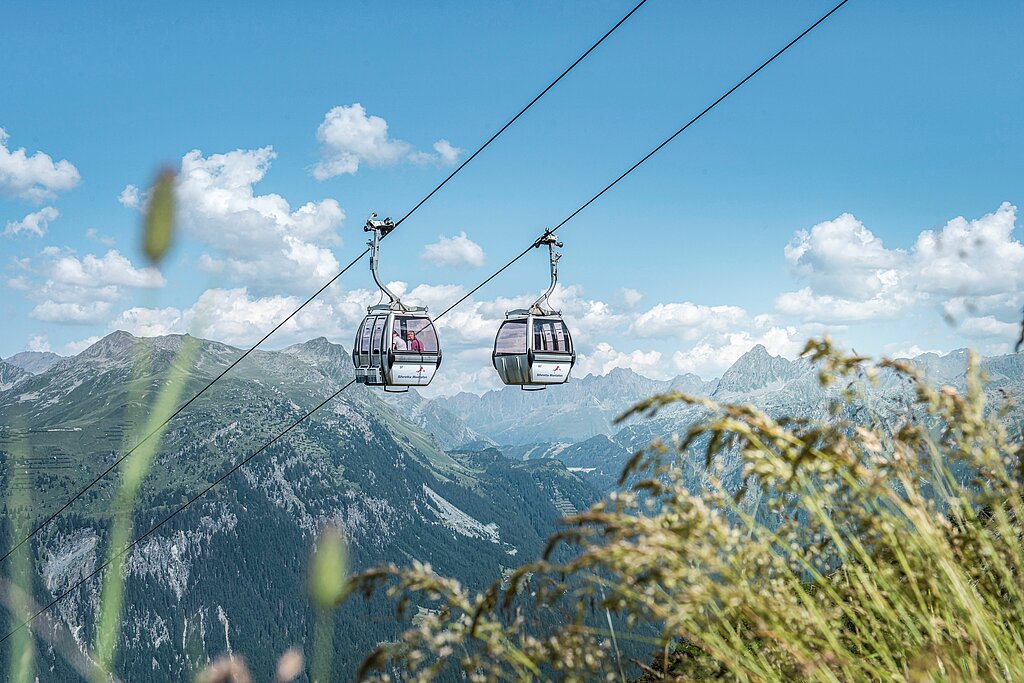
Silvretta Nova was expanded with the detachable six-person Versettlabahn monocable gondola lift, comprising Sections 1 and 2.
1987/88: Opening of Nova Stoba
Central Europe’s Largest Restaurant
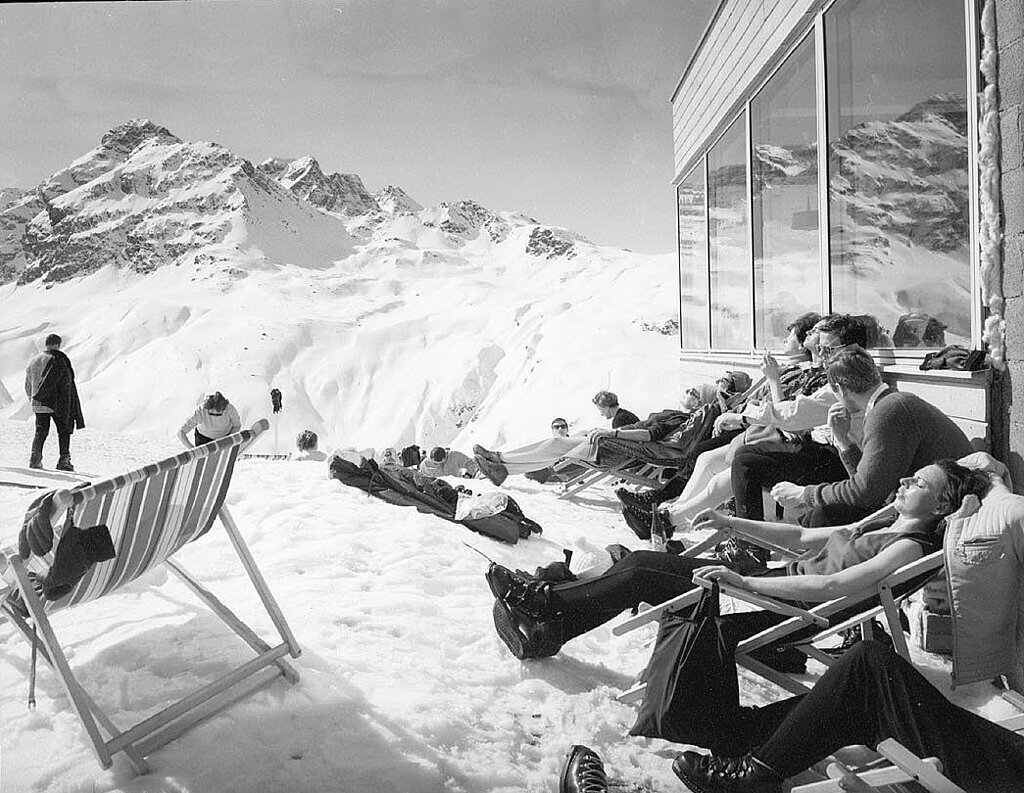
An ambitious project was realised in the Silvretta Nova ski area near the upper station of the Versettlabahn. Just in time for the beginning of the 1988 winter season, Nova Stoba opened as Central Europe’s largest restaurant, with space for a total of 1,500 guests. The project was originally budgeted at 70 million Austrian schillings, but the final costs exceeded 100 million schillings.
The first small Nova Stoba had already been built in 1968, when only a single chairlift led up the mountain. As the lift infrastructure expanded, the mountain restaurant was rebuilt in 1974 as Nova Stoba II. However, on 20 February 1975, the restaurant was destroyed by fire. Nova Stoba III was built in the summer of the same year, but it too was struck by disaster: on 16 October 1986, the building once again burnt down to its foundations. To bridge the winter season, a temporary restaurant with 750 seats was created inside the snow groomer garage of the newly built Versettlabahn. The fire was believed to have been caused by welding work on the roof. After a lengthy construction period, Nova Stoba IV finally opened in 1987 – at the time, the largest restaurant in Central Europe.
Key Events & Construction of Further Major Lift Facilities
1990 to the Present Day
| 1994/95 | Madrisellabahn & Grandaubahn in the Silvretta Nova ski area |
| 1998/99 | Spatlalift in the Silvretta Nova ski area |
| 2001 | Rinderhütte & Heimspitz chairlifts in the Silvretta Nova ski area |
| 2004/05 | Nova & Vermiel chairlifts in the Silvretta Nova ski area |
| 2007 | Walter Klaus sells his shares in Silvretta Nova to BTV. |
| 2009 | Sonnenbahn in the Silvretta Montafon ski area |
| 2011/12 | Connection of the Nova and Hochjoch sides of Silvretta Montafon via the Grasjochbahn and Hochalpilabahn connecting lifts |
| 2014 | Panoramabahn in the Silvretta Montafon ski area |
| 2016 | Silvrettabahn in the Silvretta Montafon ski area |
| 2018 | Jöchlibahn in the Silvretta Montafon ski area |
| 2021 | Construction of the new Valiserabahn |
2021: Construction of the New Valiserabahn
Another World-First Innovation
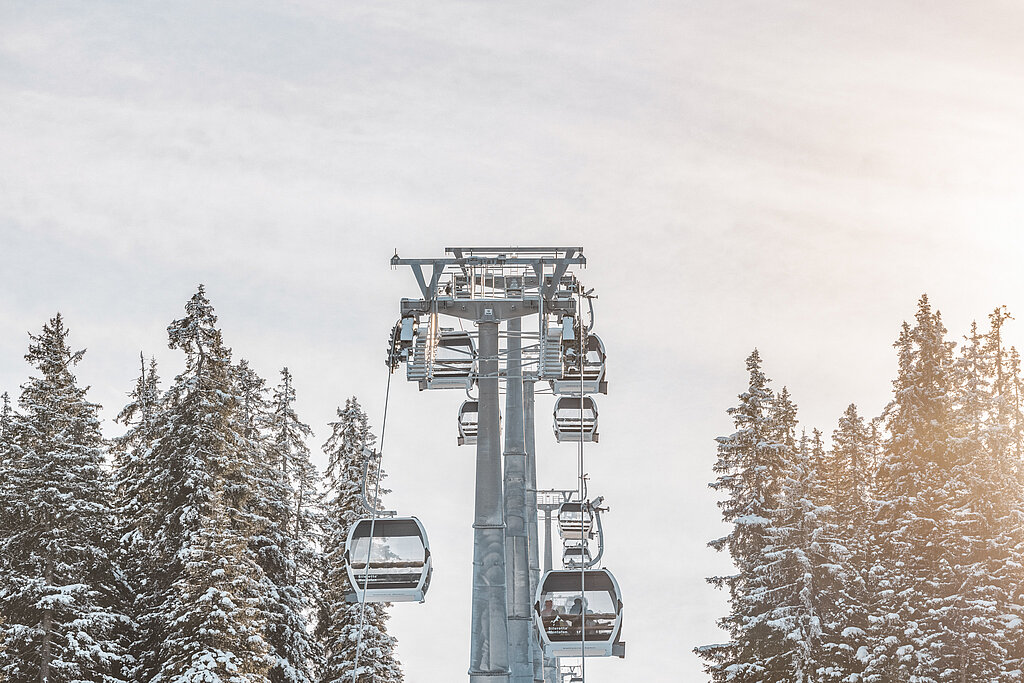
Although the former Valiserabahn was a world-first innovation in its day, it was finally allowed to enter its well-earned retirement and make way for the new Valiserabahn 2.0. And it would have been rather disappointing if the new lift had not been another world first, wouldn’t it? We cannot help but smile, as the new 10-person gondola lift is Austria’s first autonomous cable car and the world’s first and longest autonomous cable car with two sections.
With a travelling speed of up to 6.5 metres per second, a transport capacity of up to 3,600 people per hour, the new AURO system – Autonomous Ropeway Operation Systems – the Twist-In system, spacious cabins and heated seats, it is certainly impressive and turns every journey into a highlight.
“The Valiserabahn sets new global standards with state-of-the-art technology and generous space. As Austria’s first autonomous gondola lift, it is a worthy successor.”
– DI Martin Oberhammer, Managing Director of Silvretta Montafon Holding GmbH
Where Does Montafon Stand after 100 Years of Skiing History?
Skiing in Montafon Today
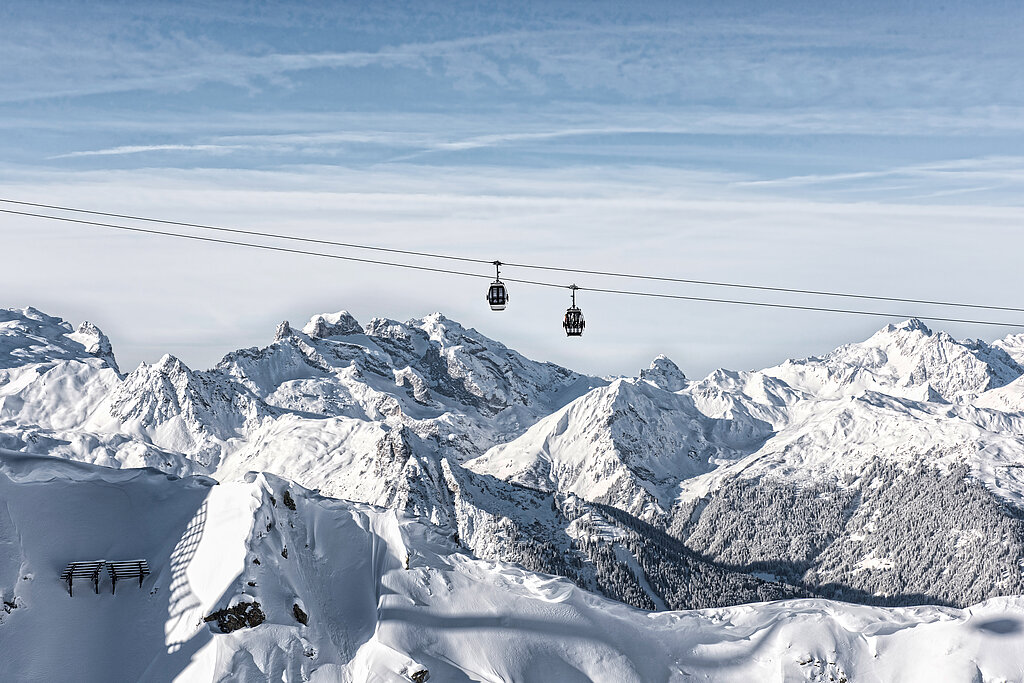
Today, Montafon offers more than 200 kilometres of ski slopes and over 60 lift facilities in winter, with a combined transport capacity of almost 100,000 people per hour. There are also more than 100 kilometres of cross-country skiing trails and 200 kilometres of winter hiking routes.
The region’s winter offering also includes 10 ski schools, 8 ski kindergartens, toboggan runs, ski jumps, a covered artificial ice rink, indoor tennis courts and numerous bars, restaurants and hotels across a wide range of price categories.
Discover More

Our Vermala Story

Ski Holidays

Discover Montafon Culture
Frequently Asked Questions about the History of Skiing in Montafon
When did ski tourism begin in Montafon?
Ski tourism in Montafon began to develop in the early 20th century. The first winter sports enthusiasts, ski clubs and later lift facilities laid the foundations for today’s winter tourism in the valley.
When was the first chairlift built in Montafon?
In 1947, Austria’s first chairlift opened at Grabs in Tschagguns. This milestone made Montafon an important location in the history of skiing in Austria.
What role did the Garfrescha Bahn play for St. Gallenkirch?
The Garfrescha Bahn was built in 1969 and brought the ski area closer to St. Gallenkirch and today’s Genusshotel Vermala. It remains a special part of Montafon’s skiing history to this day.
What was Silvretta Nova?
Silvretta Nova was an important ski area in Montafon and Austria, shaped by Walter Klaus’s leadership and pioneering spirit. It played a defining role in the development of winter tourism around St. Gallenkirch and Gaschurn. It later became today’s Silvretta Montafon.
Why is the Valiserabahn important to the history of skiing in Montafon?
The original Valiserabahn was already a technical milestone when it was first built: the world’s first circulating six-person gondola lift and, until it was dismantled in 2021, the steepest gondola lift ever built by Doppelmayr. The new gondola lift constructed in St. Gallenkirch in 2021 was another remarkable installation: Austria’s first modern autonomous gondola lift and an important access point to Silvretta Montafon.